
Why Hospital Patient Communication Becomes Difficult
Patient Enquiries Arrive Across Multiple Messaging Channels
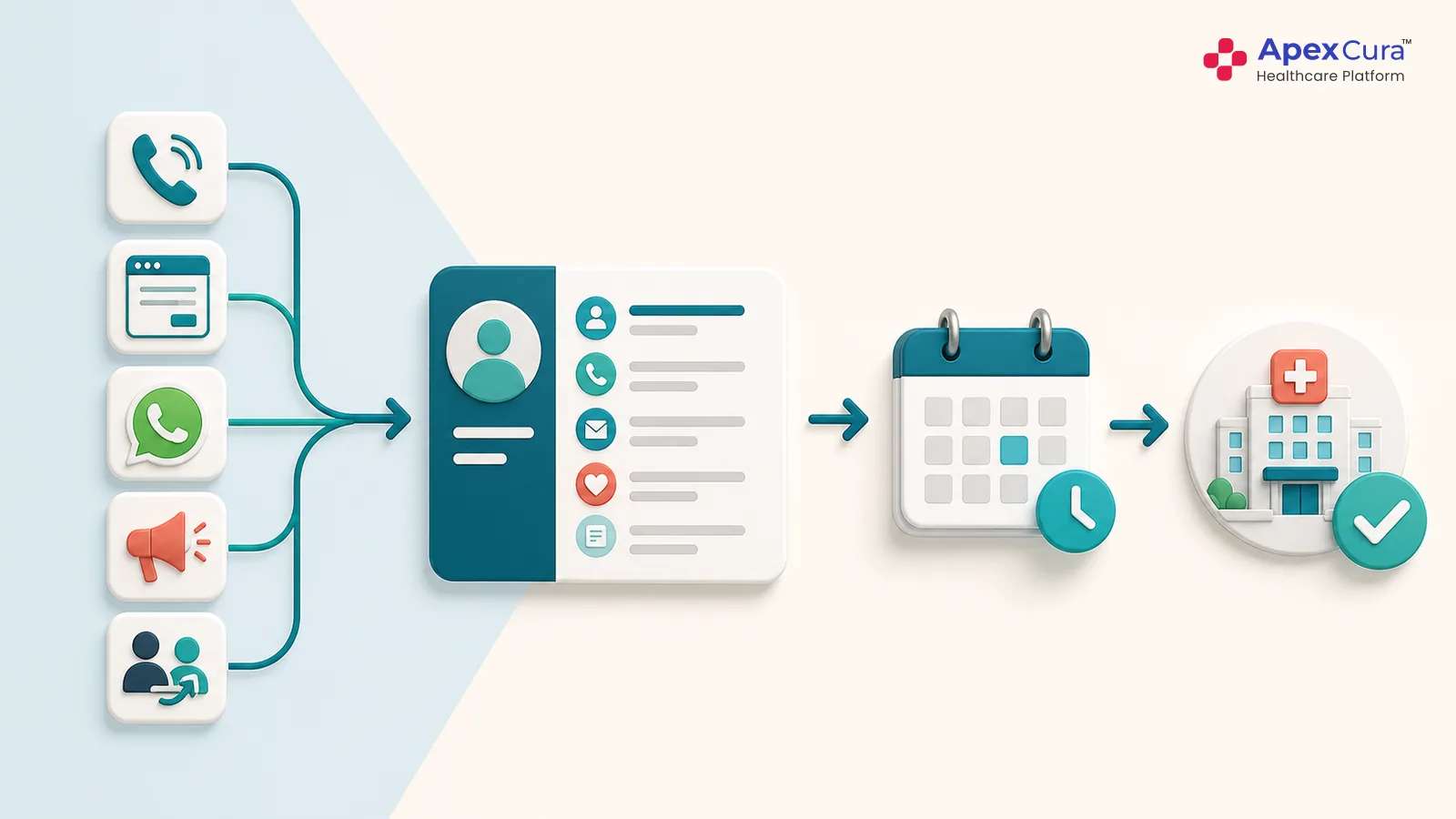
A patient may start a conversation on the hospital website and later send another message through WhatsApp. Other enquiries may arrive through Facebook Messenger or Instagram Messenger. When each channel is managed separately, staff may not see the earlier conversation or know whether another team has already responded. The same patient can therefore receive repeated questions or different information. Hospitals need a connected way to identify the channel, retain available conversation context and understand what the patient needs. A chatbot can provide a consistent first layer of text communication while keeping the original channel and conversation history visible for later action.
Patients Need Timely and Consistent Information
Many hospital messages involve practical questions. Patients may ask whether a doctor is available, how to request an appointment or where a particular service is provided.
Delayed answers can make the patient repeat the question through another channel or contact another hospital. Inconsistent answers create a different problem. One team may use an old schedule while another has current information. Hospitals should define which information the chatbot may provide and connect suitable responses with approved data sources. The objective is not to answer every possible question. It is to respond consistently where reliable information is available and involve staff when it is not.
Staff Handovers Can Lose the Earlier Conversation Context
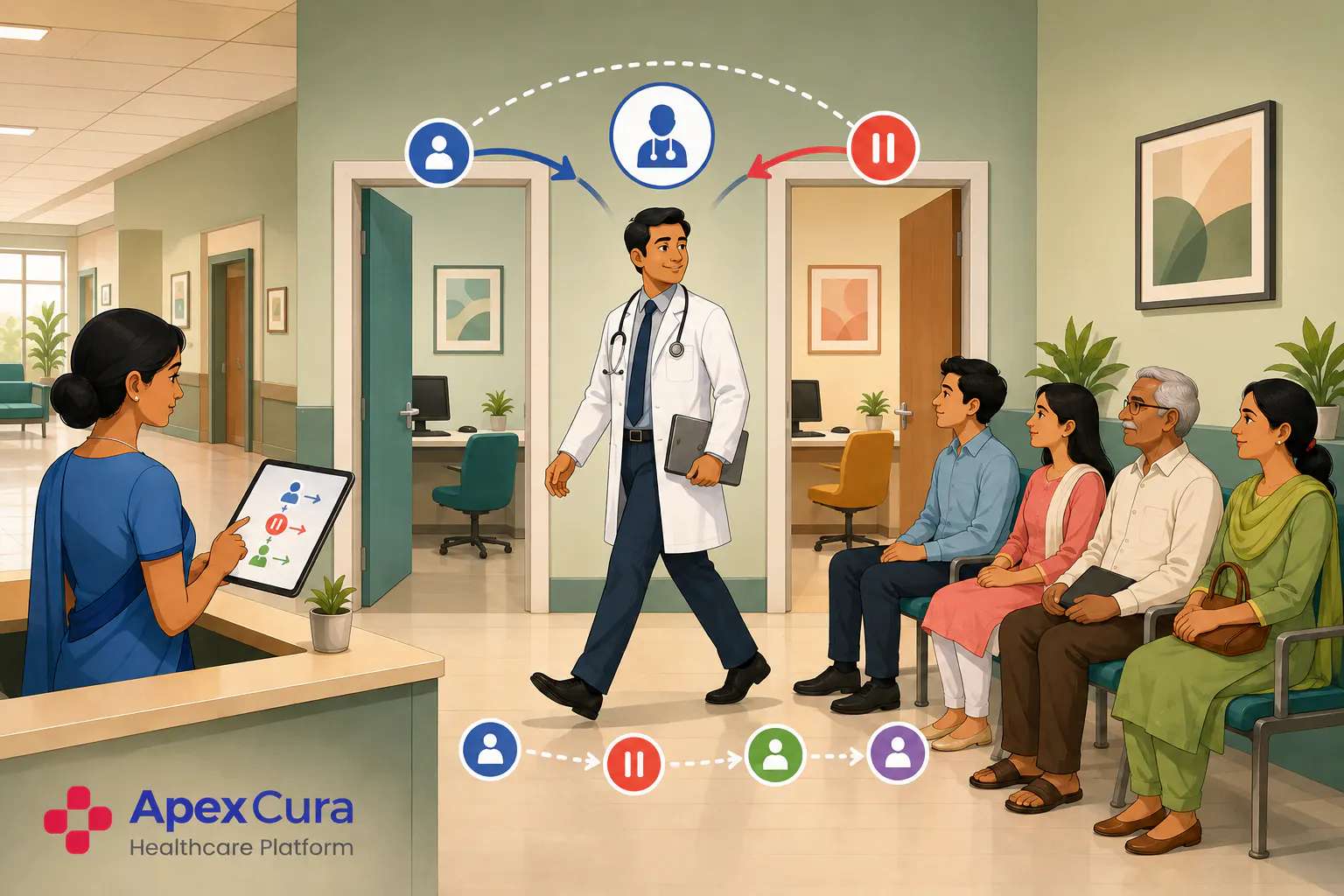
Some conversations begin with a routine question but later require help from hospital staff. A patient may need clarification about an appointment, report or service that the chatbot should not resolve independently. A weak handover sends the patient to a person without explaining what was already discussed. The patient then starts again from the beginning. A useful handover should carry the available context.
- The channel through which the patient contacted the hospital.
- The patient’s stated requirement and selected options.
- The information already provided during the conversation.
- The question or action that still needs human support.
- The appropriate team for the next response.
How AI Chatbots Support Hospital Patient Communication
Understand Patient Intent and Provide Approved Information
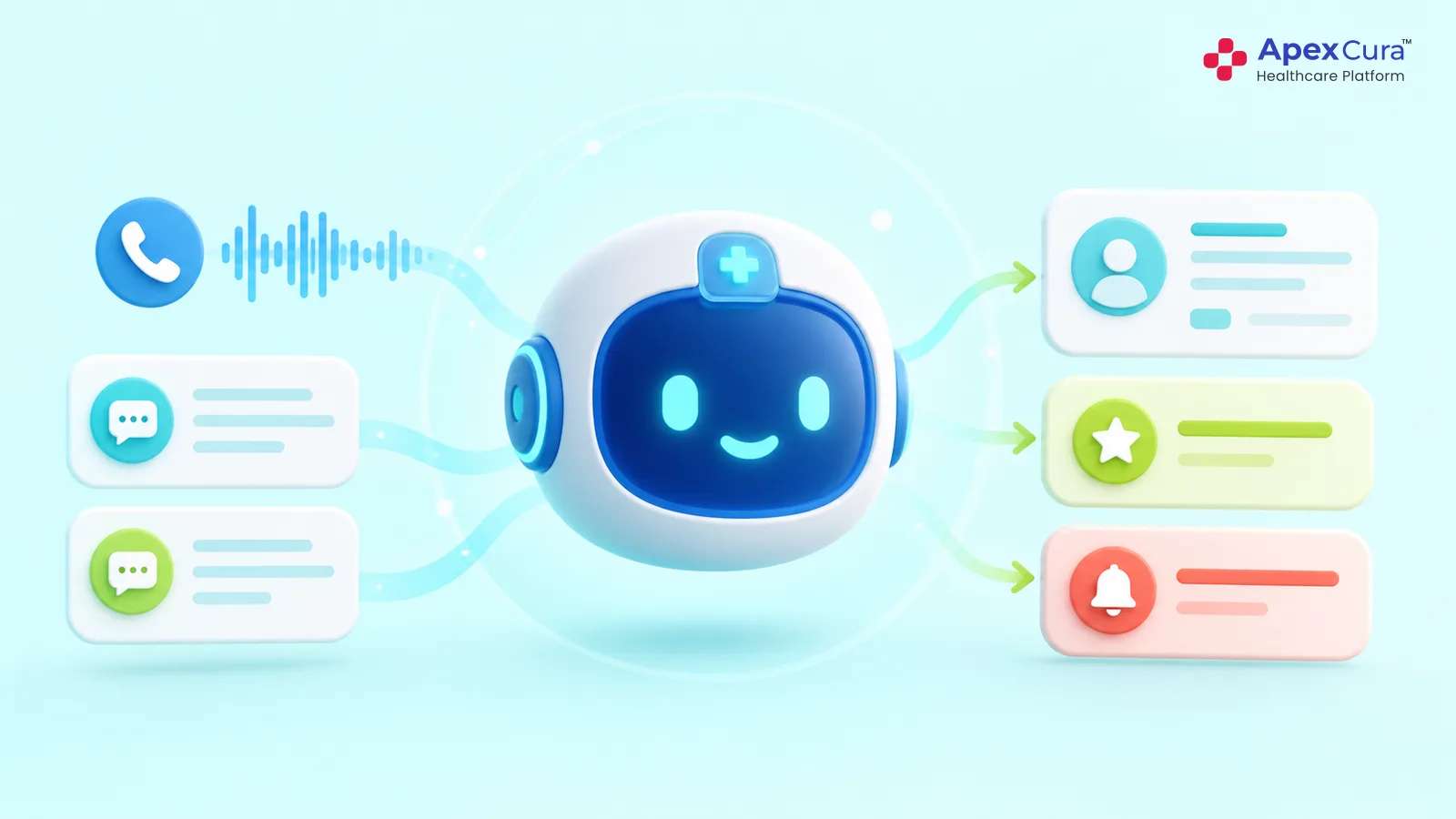
Patients do not always use the same words as the hospital. One person may ask for a heart doctor, while another asks for cardiology. Conversational AI can identify the likely intent behind the written message and match it with an approved response or workflow. The response should come from information controlled by the hospital, such as doctor details, service information or supported appointment data. The chatbot should not invent an answer when the required information is missing. It can ask a clarifying question or transfer the conversation to staff. This controlled approach makes automation useful without presenting uncertain information as a confirmed hospital response.
Guide Patients Through Enquiries and Supported Workflows
A chatbot can guide the patient through a short sequence instead of presenting a long menu. The exact workflow depends on the hospital and available integrations.
Requirement: Understand the speciality, doctor, service or support question.
Information: Provide approved details relevant to the patient’s request.
Next step: Guide a supported action or explain that hospital staff will assist.
The conversation should remain simple and allow the patient to return, correct an answer or request human help.
Transfer Complex Conversations to a Live Agent with Context
A hospital chatbot needs a clear boundary for human handover. Clinical questions, unusual requests, complaints and unresolved operational issues may require judgement that automation should not provide. The chatbot can identify the need for escalation and move the conversation to a live-agent workflow. The receiving employee should see the available conversation history and the reason for transfer. This helps staff respond without asking the patient to repeat every detail. Hospitals should define which topics always need human attention, which teams receive them and how pending conversations are monitored. A good chatbot supports hospital teams; it does not remove necessary human responsibility.
Connect patient conversations across messaging channels with approved hospital information and live-agent support.
Explore Apex GenAI ChatbotWhat Hospitals Should Evaluate and Measure
Support the Messaging Channels Patients Already Use
Hospitals should evaluate channels according to actual patient behaviour rather than enabling every channel without a plan. Website chat can support visitors who are already exploring hospital information. WhatsApp provides a familiar messaging path for many patients. Facebook Messenger and Instagram Messenger may be relevant when enquiries originate from those platforms. Each connected channel should use the same approved information and escalation rules where practical. Teams should also understand any platform restrictions, consent requirements and template rules. The narrower guide to WhatsApp Patient Communication explains how that specific channel can fit within the broader chatbot strategy.
Connect the Chatbot with Relevant Hospital Systems
A chatbot becomes more useful when it can retrieve approved information or initiate a supported workflow through hospital systems. Depending on the implementation, integrations may involve appointments, LIS, billing, CRM, WhatsApp infrastructure and live-agent tools. These systems remain separate applications with their own responsibilities. The chatbot uses approved interfaces to obtain or pass the information needed for the conversation. Hospitals should evaluate patient matching, data permissions, response timing, system availability and fallback behaviour. If an integration is unavailable, the chatbot should explain the limitation or transfer the conversation instead of presenting old or assumed information. Integration quality directly affects conversation reliability.
Measure Conversation Outcomes and Human Handover
Message volume alone does not show whether patient communication is working. Hospitals should review what patients ask, what the chatbot resolves and where staff support is required.
- Common patient intents and repeated unanswered questions.
- Conversations completed through an approved workflow.
- Conversations transferred to a live agent.
- Pending handovers and time taken for staff response.
- Questions that require updated information or workflow changes.
Regular review helps hospitals improve approved responses and decide where automation should stop.
Conclusion
AI patient communication for hospitals should make text conversations easier to manage without removing human responsibility. A chatbot can understand patient intent, provide approved information, guide supported workflows and transfer complex requests with useful context. Hospitals should evaluate the channels patients use, the systems required for reliable answers and the quality of live-agent handover. They should then measure conversation outcomes and repeated information gaps. An AI Chatbot for Hospitals creates value when it gives patients clearer access to hospital information and helps staff focus on conversations that need personal support.