OP Visits & IP Discharges
Identify completed OP visits and IP discharges from the HIMS or billing system and send the feedback request automatically.
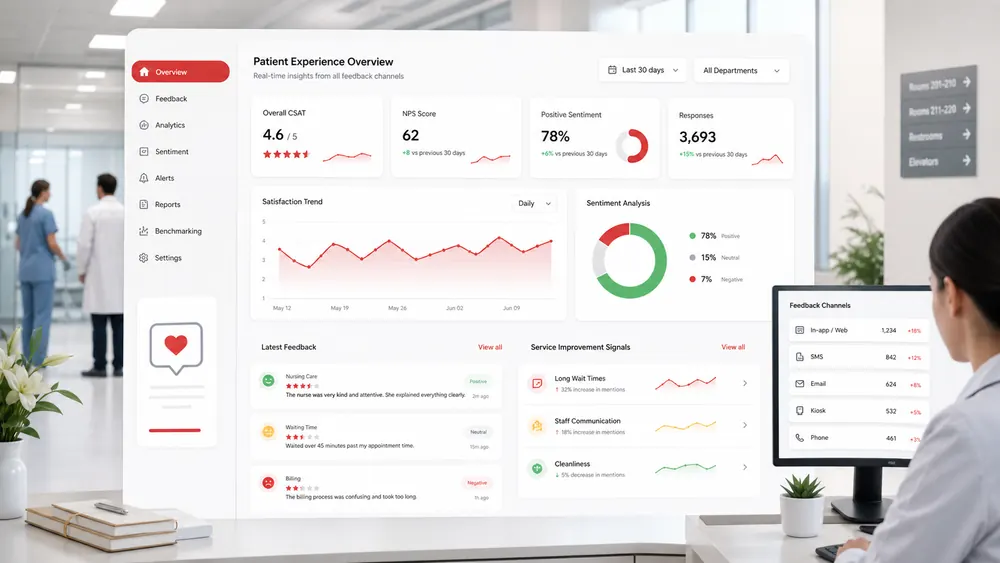
Apex Patient Feedback Software automates feedback collection after OP visits and IP discharges, and collects feedback inside the hospital through QR codes and PRE tablets. It measures CSAT, NPS, doctor-level experience and branch performance, then converts negative feedback into assigned incident tickets for faster service recovery.
Use hospital-system events to send the right feedback request without depending on staff to prepare lists or trigger messages.
Identify completed OP visits and IP discharges from the HIMS or billing system and send the feedback request automatically.
Send structured feedback requests through WhatsApp, SMS or configured digital links in the patient's preferred regional language.
Place QR codes in waiting areas inside the hospital so patients can give feedback while they wait.
Patient relations executives collect feedback on tablets from OP patients in the OP waiting area and IP patients in the nursing area.
Collect real-time patient feedback at relevant touchpoints, detect low ratings or negative sentiment, alert the responsible team and track action until the concern is resolved.
The HIMS or billing system confirms an eligible OP visit, IP discharge or configured patient interaction.
The appropriate feedback request is sent automatically through the configured communication channel.
Patient ratings, comments, CSAT, NPS and sentiment are recorded in the hospital feedback workflow.
Low ratings or negative sentiment create an alert or assigned ticket for the responsible team.
Track the response, action taken, patient closure and recurring service-quality trends.
Patient experience software should do more than collect survey responses. Hospitals need to identify recurring service failures, department-level issues, unresolved complaints and opportunities for service recovery.
Identify eligible OP visits and IP discharges directly from hospital-system data.
Send requests, analyse responses, and create actions without manual list preparation.
Deliver relevant feedback forms in languages patients can understand and respond to.
Compute CSAT and NPS for hospitals by doctor, department, branch and group.
Compare feedback across departments, centres, branches, and the hospital group.
Identify dissatisfaction, recurring complaint patterns and urgent recovery situations automatically.
Convert negative feedback into assigned, time-bound service-recovery tickets.
Track whether the hospital contacted the patient, resolved the concern and closed the loop to recover dissatisfied patients.
Automatically identify patients, collect feedback, detect dissatisfaction.
Hospital feedback requires event-based triggers, organisational measurement, escalation, and recovery workflows.
Use operational data to automate patient selection, communication, measurement, and incident closure.
Move from adhoc survey reports to real-time patient feedback, continuous experience measurement and accountable service recovery.
Automated triggers reached all eligible patients without manual call lists.
Automated outreach captured feedback from approximately 15% of eligible patients.
Timely issue detection and corrective action improved CSAT by 10%.
Closed-loop recovery and service improvements increased NPS by 12%.
Prompt follow-up with dissatisfied patients improved recovery and rebuilt trust.
Unified dashboards gave leadership visibility across hospitals, branches, and service lines.
Patient feedback software automatically collects feedback from patients after OP visits and IP discharges, measures satisfaction (CSAT and NPS), flags negative feedback and assigns it to the responsible team so the hospital can recover the patient.
It automatically identifies eligible patients, sends timely feedback requests, and uses relevant forms to improve response rates.
Look for automatic triggers from HIMS or billing after OP visits and IP discharges, collection on WhatsApp, SMS, QR codes and tablets in local languages, CSAT and NPS by doctor, department and branch, AI detection of negative feedback, and assigned service-recovery tickets that are tracked until closure.
Yes. Patients can scan QR codes placed in waiting areas, and patient relations executives can collect feedback on tablets from OP patients in the OP waiting area and IP patients in the nursing area.
The system integrates with HIMS and billing systems to identify completed OP visits and IP discharges automatically.
Yes. Hospitals can configure separate feedback forms by patient journey, department, specialty, branch, and service type.
AI analyses ratings and comments, detects dissatisfaction, and prioritises patients requiring immediate service recovery and follow-up.
Yes. Negative feedback can automatically create assigned incident tickets with ownership, priority, status, and resolution tracking.
The Patient Feedback Software provides dashboards comparing CSAT and NPS across doctors, departments, branches, hospitals, and the overall group.
It tracks contact attempts, actions taken, resolution status, patient response, and final recovery within each incident.
Yes. Leadership can analyse recurring complaints, service gaps, recovery performance, and experience trends across the hospital network.
Practical guides on feedback automation, complaint closure, and patient experience measurement.
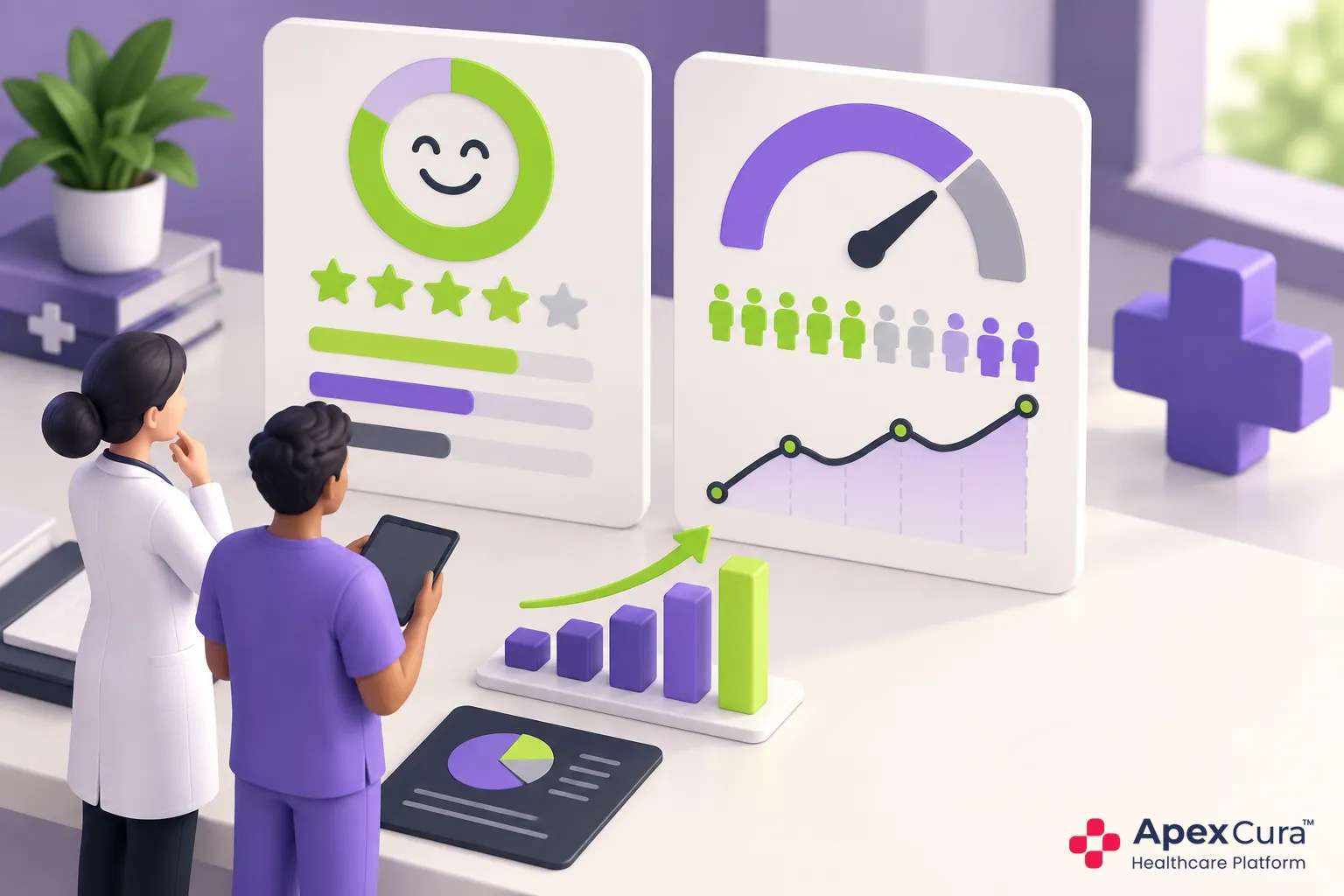
Use CSAT and NPS to compare patient experience across doctors, departments and branches and track improvement.
Read article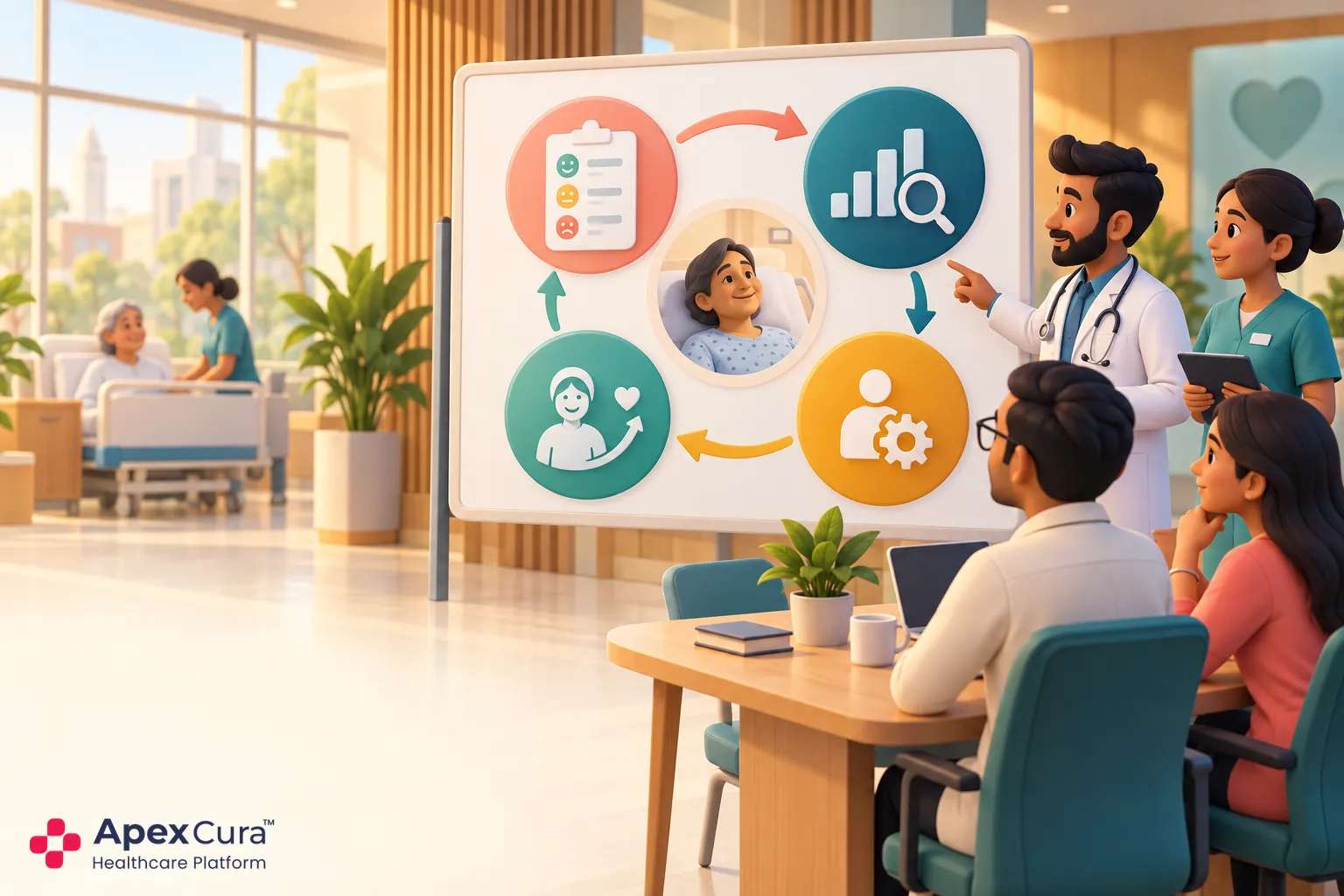
See how hospitals can measure feedback, assign practical actions, and review whether patient experience improves.
Read article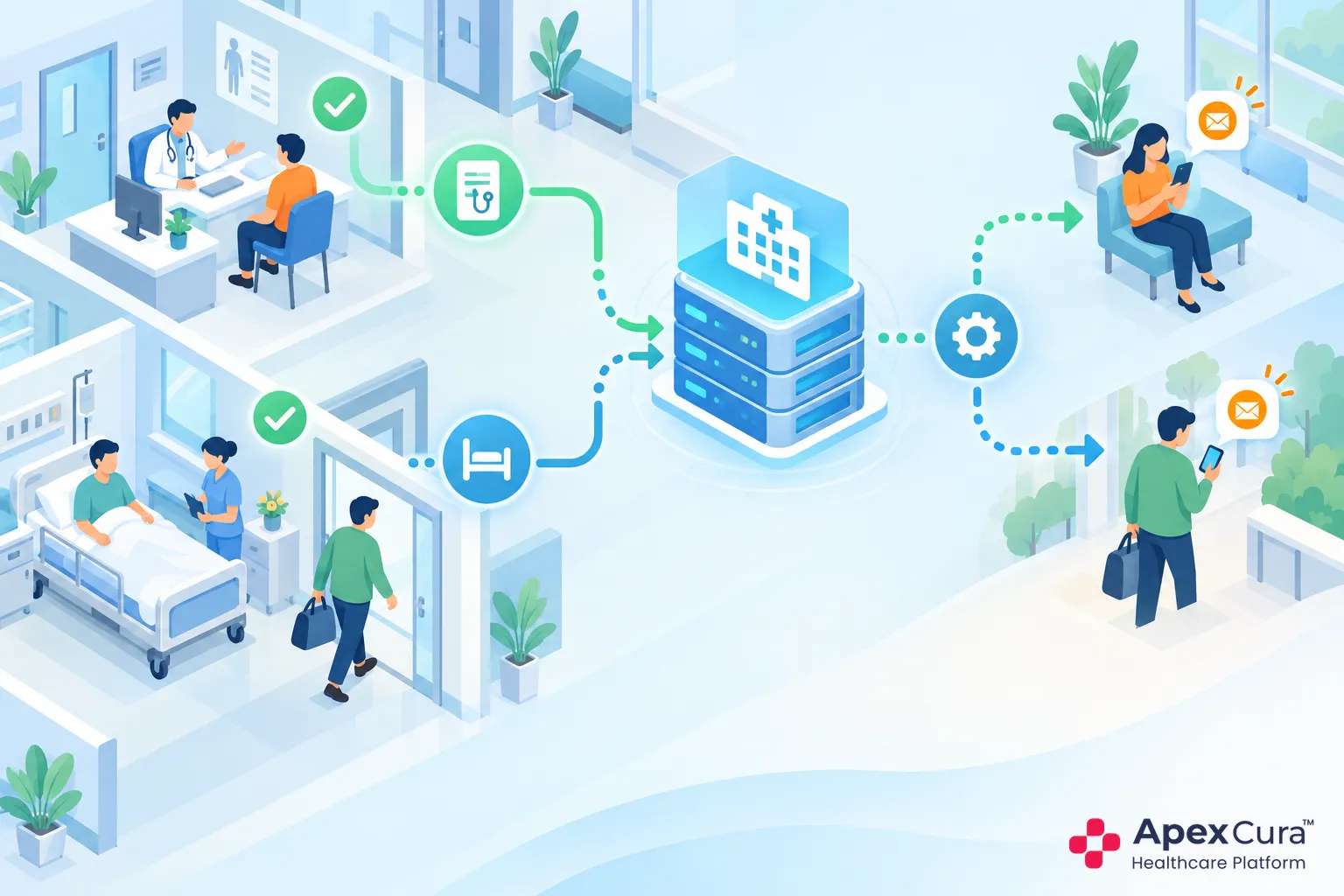
Learn how defined HIMS events can trigger timely feedback requests without manual patient-list preparation.
Read article
Follow a practical process for acknowledgement, ownership, investigation, patient communication, and documented closure.
Read article
At Apex Cura, we specialize in providing cutting-edge healthcare technology solutions tailored to meet the unique needs of the Hospitals. With a focus on leveraging AI and advanced analytics, we are dedicated to empowering hospitals to achieve operational excellence and superior patient care and drive better financial and medical outcomes.
© Copyright 2026.
All rights reserved.


