How AI Helps Hospitals Understand Call-Centre Conversations
Converting Call Recordings Into Transcripts and Summaries
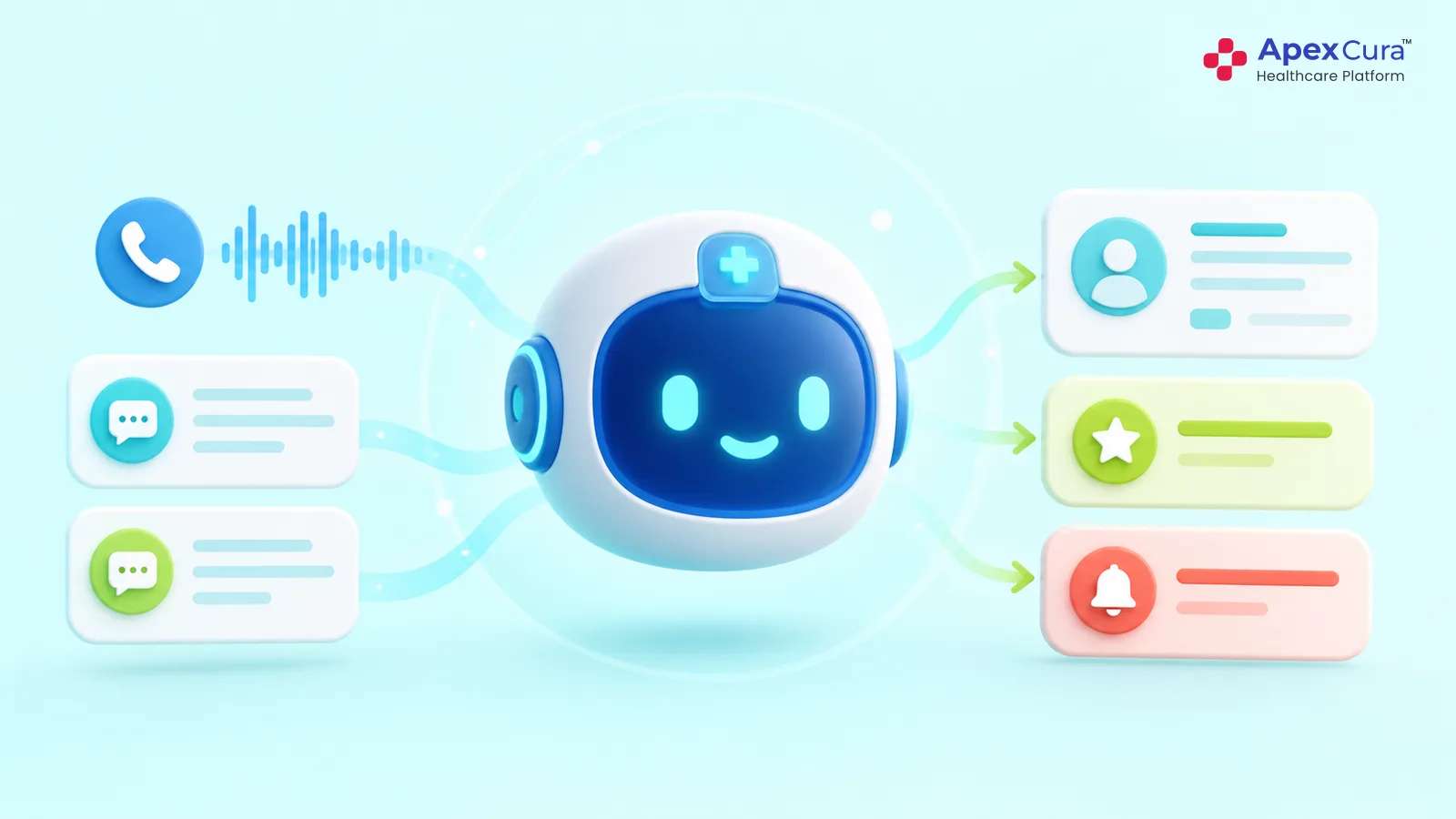
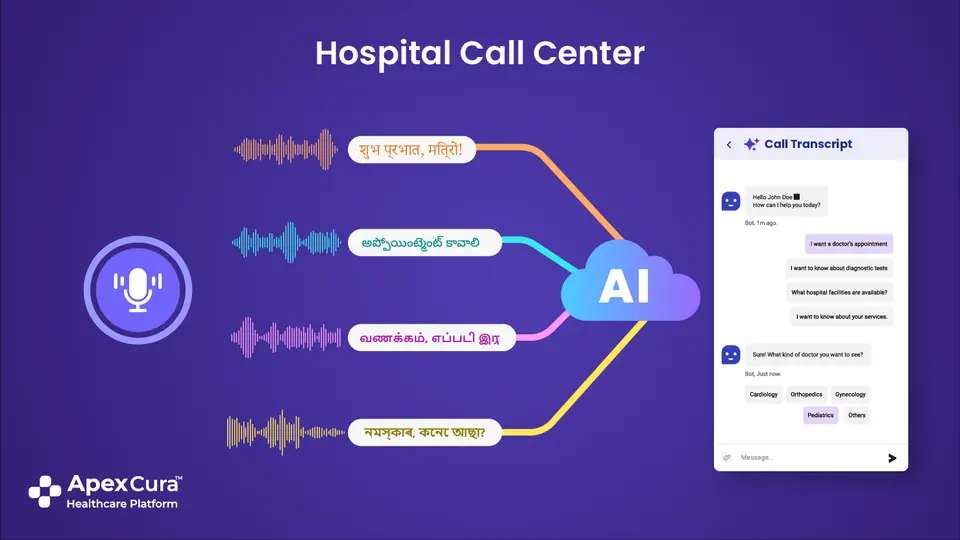
When a supported telephony integration makes call recordings available, voice-to-text AI for hospital call centres converts speech into transcripts and prepares concise conversation summaries. It operates as an independent 24/7 monitoring layer across available recordings, without requiring teams to replay every call manually. The transcript preserves the patient’s questions, the agent’s responses and the important context exchanged during the call. The summary condenses this conversation into a directly usable account of what was discussed. Searchable text also makes calls easier to locate and compare across agents, enquiry types and operating periods. Performance depends on recording availability, audio clarity and integration configuration. These outputs create the foundation for subsequent analysis.
Identifying Patient Intent and Service Requirements
AI examines each connected transcript to determine why the patient contacted the hospital. It can identify whether the conversation concerns an appointment, doctor availability, treatment, diagnostic service, estimate, follow-up or support request. The analysis separates patient enquiries from general information calls and classifies the relevant intent using hospital-defined categories. When one conversation contains several requirements, AI identifies the primary need while preserving secondary topics mentioned by the patient. It can also recognise the speciality, service, doctor or preferred branch discussed during the interaction. This creates a consistent understanding of call purpose across large conversation volumes without depending on brief or differently written agent notes.
Recognising Conversation Context and Patient Sentiment
Understanding a call requires more than identifying one keyword or service. AI analyses the complete conversation to recognise the patient’s context, questions, concerns and changes in intent as the discussion progresses. It can distinguish the patient’s statements from the agent’s responses and identify whether requested information was provided during the call. Sentiment analysis highlights positive, neutral or negative language and detects conversations showing uncertainty, dissatisfaction or urgency. These signals describe what happened inside the interaction without yet deciding the operational action that follows. Together, the transcript, summary, intent, topics and sentiment create a structured interpretation of the call for downstream use.
How AI Helps Identify Enquiries Requiring Attention
Creating Structured CRM Records and Next Actions
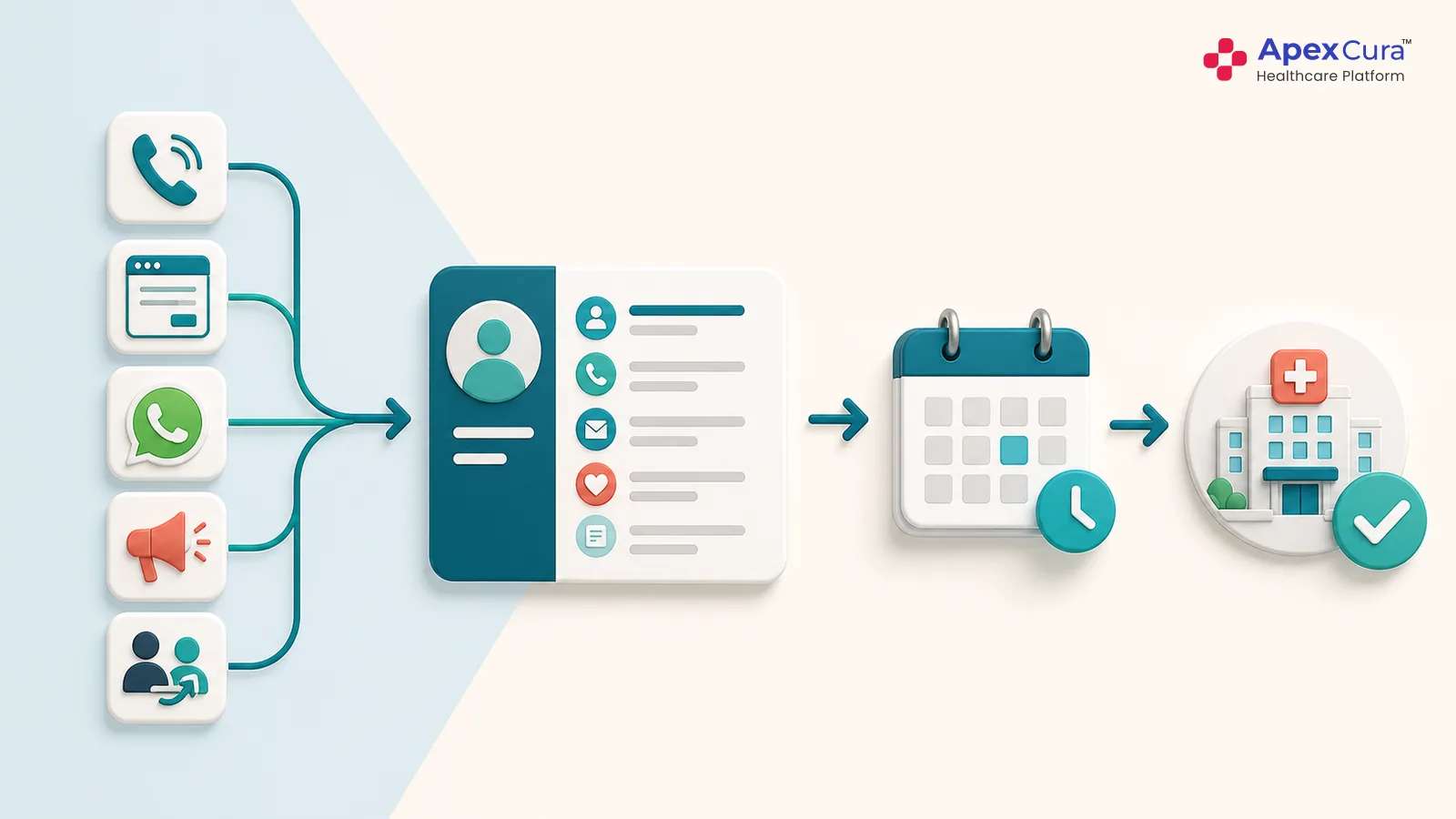
After understanding the conversation, AI converts relevant information into a structured CRM record. It can populate the enquiry type, requested service, doctor or speciality, preferred branch, call disposition and agreed commitment. The system then derives the next actionable step, such as booking support, a callback, availability confirmation, estimate discussion or information sharing. Hospital-defined rules determine the owner, due time and workflow applied to that action. This connects the meaning of the call with operational execution without requiring an agent to recreate the conversation as manual notes. Each actionable patient requirement becomes visible with the context, ownership and timeline needed for subsequent CRM tracking.
Highlighting Missed Commitments and Delayed Follow-Ups
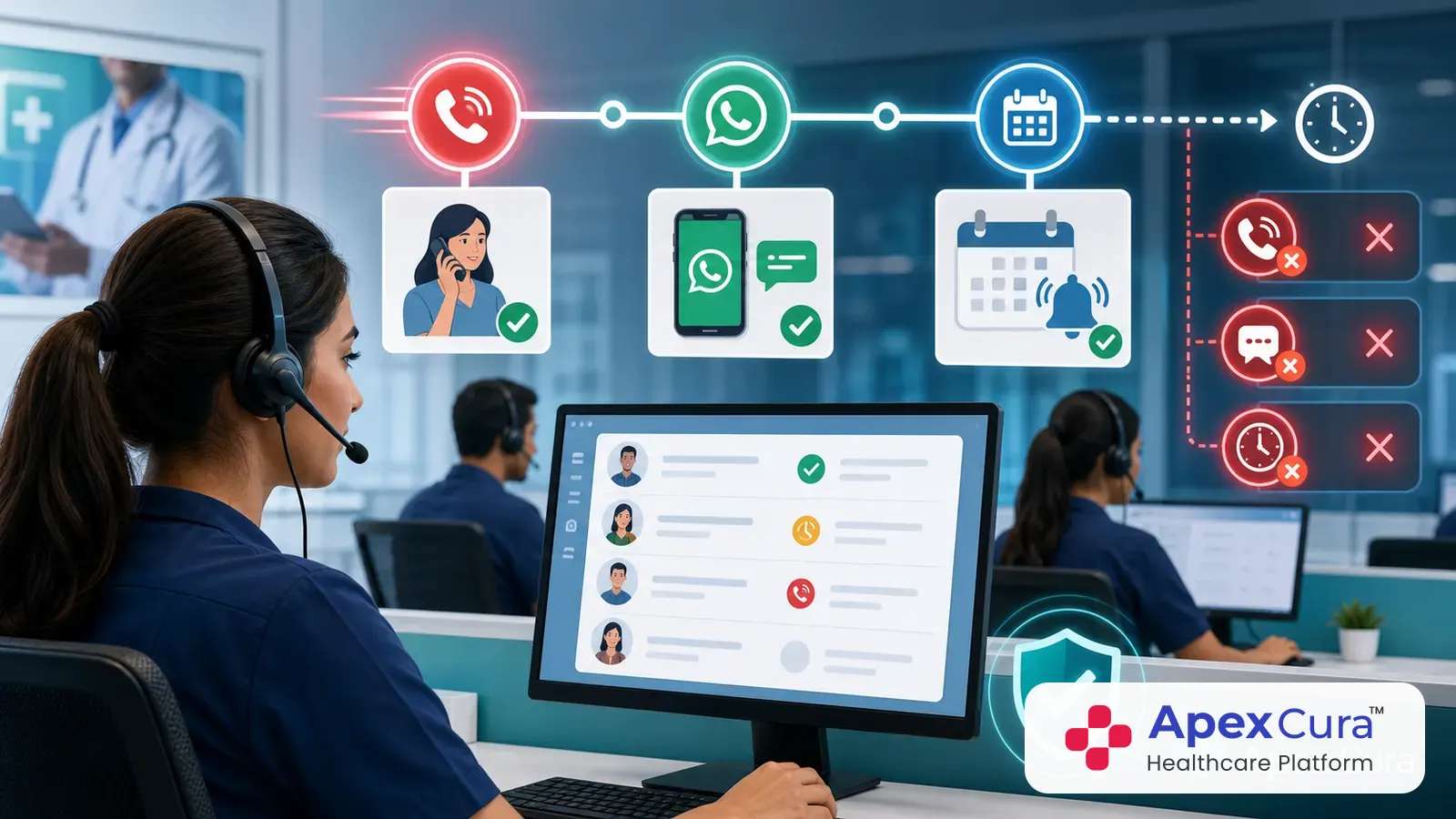
A conversation may contain a commitment to call back, confirm doctor availability, share an estimate or provide information within a stated period. AI extracts the commitment, creates the relevant next action and compares it with subsequent CRM activity. If the expected action remains incomplete, the system can highlight or escalate the enquiry according to configured timelines. This creates continuous visibility into commitments that might otherwise remain inside recordings or short notes. Automated action tracking can reduce missed patient opportunities and the impact of delayed follow-ups. The CRM maintains ownership, due dates, escalation and completion status, while AI derives the actionable requirement from the recorded conversation.
Prioritising Actions for Agents and Supervisors
Not every call requires the same level of attention. AI continuously prioritises records using signals such as an unresolved patient requirement, negative language, a missing disposition, repeated contact or an overdue promised action. Hospital rules determine which signals carry priority, which workflow begins and who receives the resulting task. The prioritised queue allows agents and supervisors to focus first on conversations with greater patient or operational impact while routine enquiries continue through the standard process. Because the priority is derived from the transcript, CRM history and configured rules, teams receive both the reason and the next action. This creates a consistent process for handling high-attention conversations at scale.
Use AI to understand patient calls and identify enquiries requiring attention.
Explore Apex Healthcare CRMHow AI Supports Call Quality and Operational Improvement
Reviewing Whether the Agent Understood the Patient’s Requirement
Conversation analysis evaluates whether the agent identified the patient’s requirement, provided a relevant response and established a clear next step. Hospitals can define quality criteria for different enquiry types, and AI can monitor available calls against those expectations continuously. The system can identify missing information, incomplete dispositions, process deviations and conversations requiring coaching or operational attention. This expands quality monitoring beyond the small sample that supervisors can review manually. Results can be organised by agent, team, enquiry type, branch or period to reveal recurring patterns. Managers can use these findings to plan coaching, correct information gaps and improve the consistency of patient communication across the call-centre operation.
Identifying Recurring Patterns for Agent Coaching
Individual call findings become coaching evidence only when a pattern appears across multiple comparable conversations. AI can group quality results by agent, team, enquiry category and period, showing whether a difficulty is isolated or recurring. Managers may find that one group consistently misses a required disposition, while another needs clearer information for a particular service enquiry. Coaching can then address the repeated pattern instead of relying on one unusual call. Later conversation groups can be assessed against the same criteria to show whether performance changed. This aggregate view gives supervisors a practical sequence: select a recurring issue, provide focused coaching and measure whether subsequent calls demonstrate more consistent handling.
Connecting AI Findings With CRM Outcomes
AI findings become operationally useful when hospitals compare them with CRM outcomes. Teams can examine whether enquiries with identified gaps received follow-up, progressed to appointments or remained unresolved. They can also study repeated manual work, delayed actions and avoidable review effort. Targets such as reducing operational costs by 20–30% or improving efficiency by up to 30% must be validated for each deployment using agreed cost, workload and outcome definitions; they are not universal guarantees. For the broader execution process, see the hospital call centre CRM workflow. AI provides signals, while the CRM preserves ownership, actions, statuses and measurable results.
Conclusion
AI Healthcare CRM enables hospital call centres to understand patient conversations reliably. It independently monitors calls, creates transcripts and summaries, identifies patient intent and converts commitments into structured next actions. It also detects missed enquiries, prioritises records, monitors call quality and derives coaching opportunities from patterns. Telephony continues to handle calling, while the CRM maintains enquiry ownership, tasks, timelines, escalation, statuses and outcomes. Together, these capabilities create visibility from conversation to action without depending on manual recording reviews. Hospitals can use this intelligence to strengthen follow-up execution, improve call-centre consistency and connect actionable patient requirements with a measurable CRM outcome.