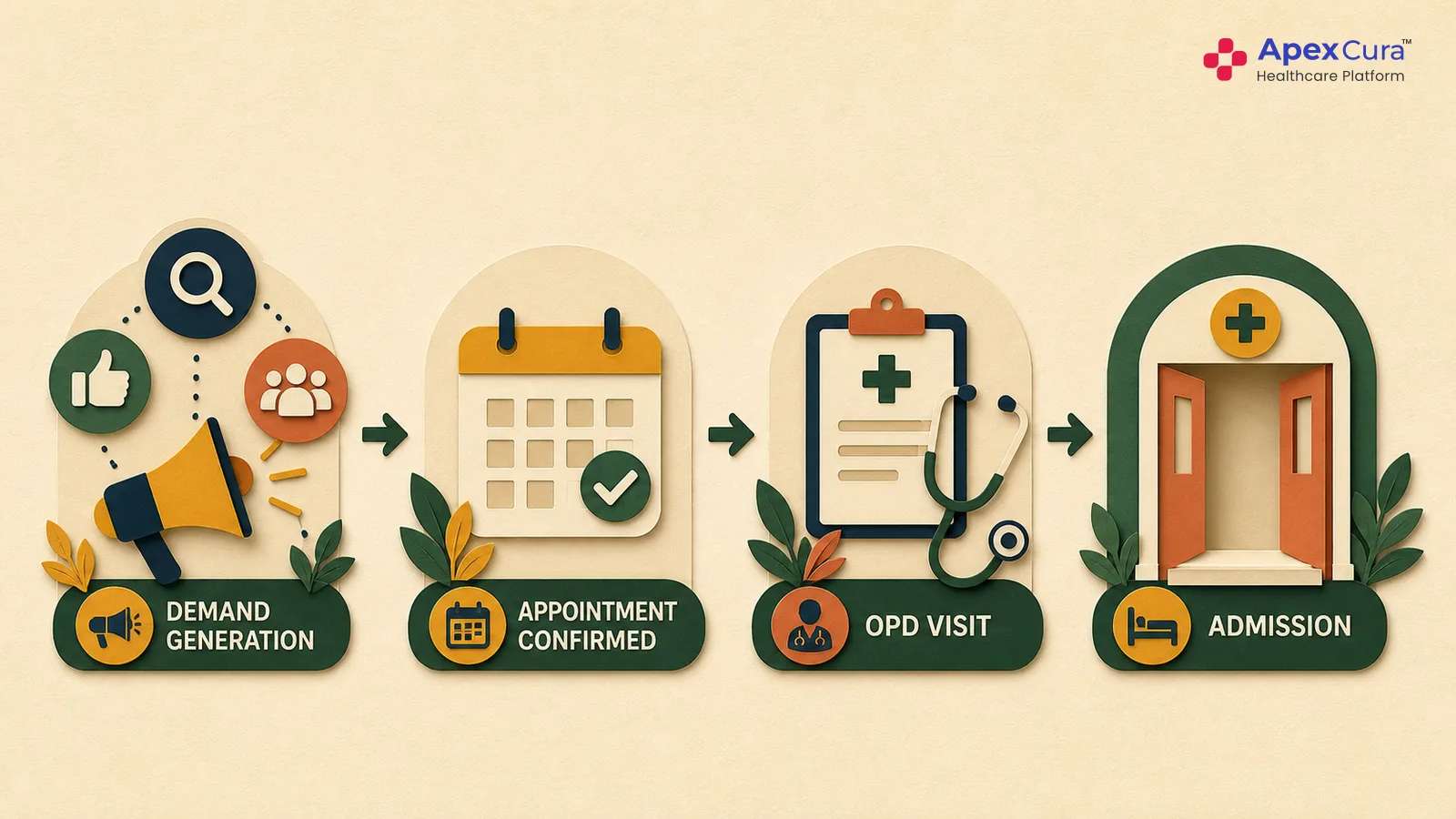
Hospitals invest in digital campaigns, social media ads, outreach clinics, medical camps and website forms to bring in new patients. But many valuable opportunities are already present inside existing hospital data. Apex Cura used AI lead generation for hospitals to analyse patient conversations, clinical follow-up signals and CRM data, helping one hospital identify 25% more patient leads without increasing marketing spend.
The hospital’s hidden lead problem
Most hospital teams act on enquiries that are explicitly submitted, such as a contact form, WhatsApp message or phone call requesting a consultation. Those are visible leads. The harder problem is identifying patients who showed intent but did not complete the next step.
Why valuable patient enquiries were being missed
Several high-intent patient signals were getting buried inside day-to-day operations. A patient might mention the need for a scan during a call but not book one. Another patient might drop off during a chat while asking about consultation slots. A treatment plan might recommend a follow-up, but no revisit gets scheduled. These silent signals often point to real patient need, but without AI-assisted review they are difficult for teams to identify consistently.
What data Apex Cura analysed
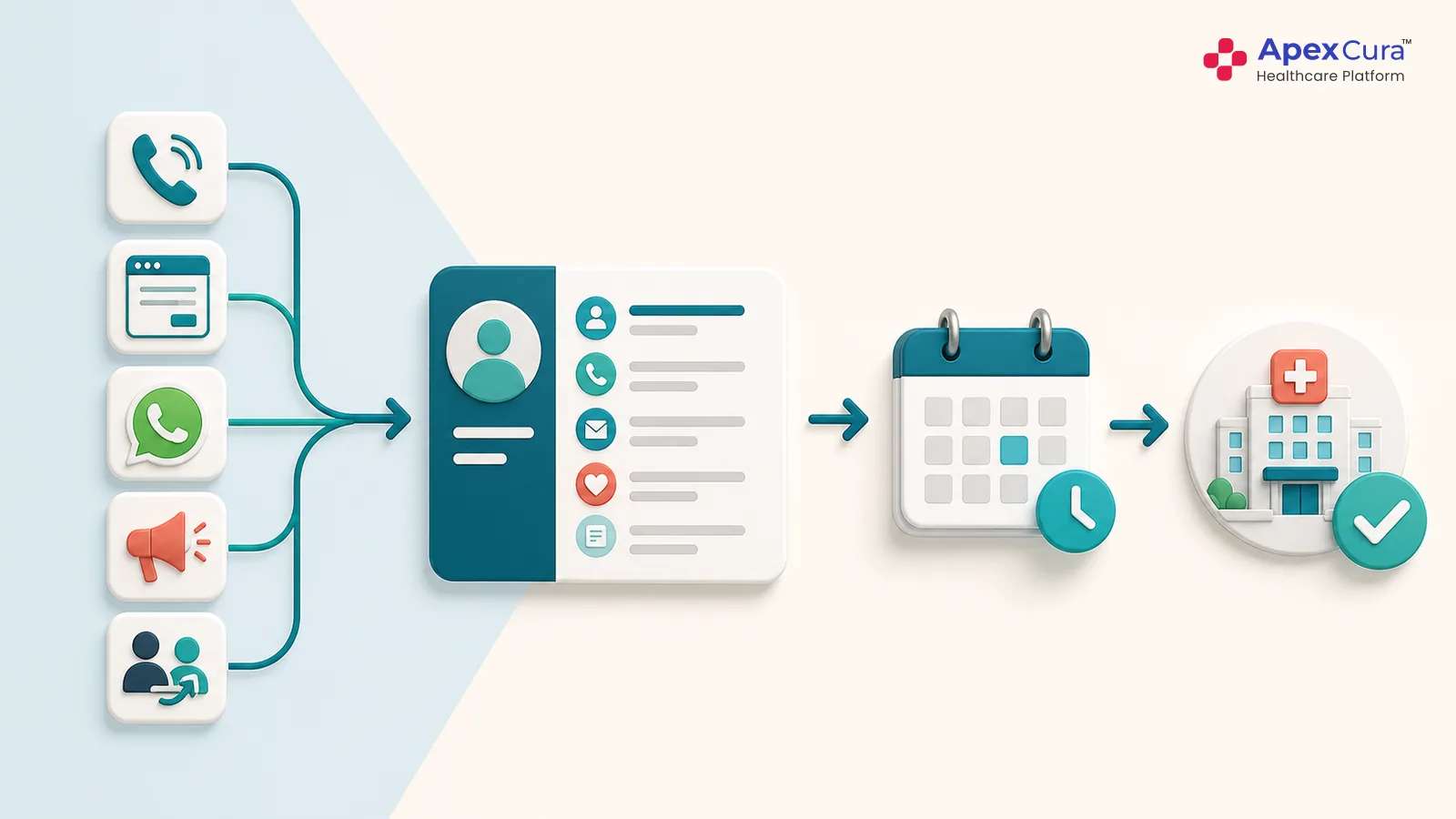
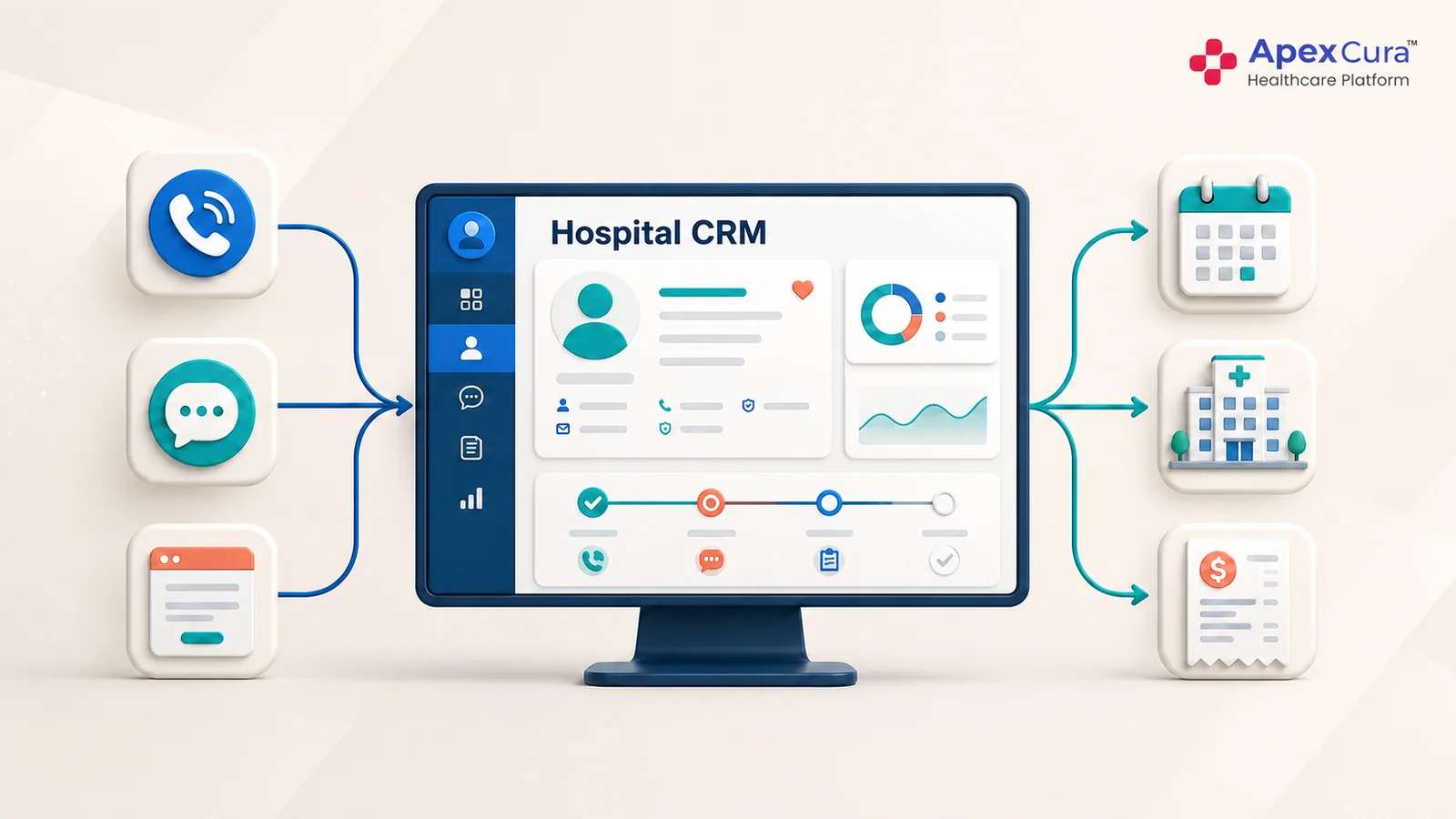
Apex Cura analysed unstructured and operational hospital data to find missed patient intent and convert those signals into actionable leads inside the hospital CRM.
Call transcripts
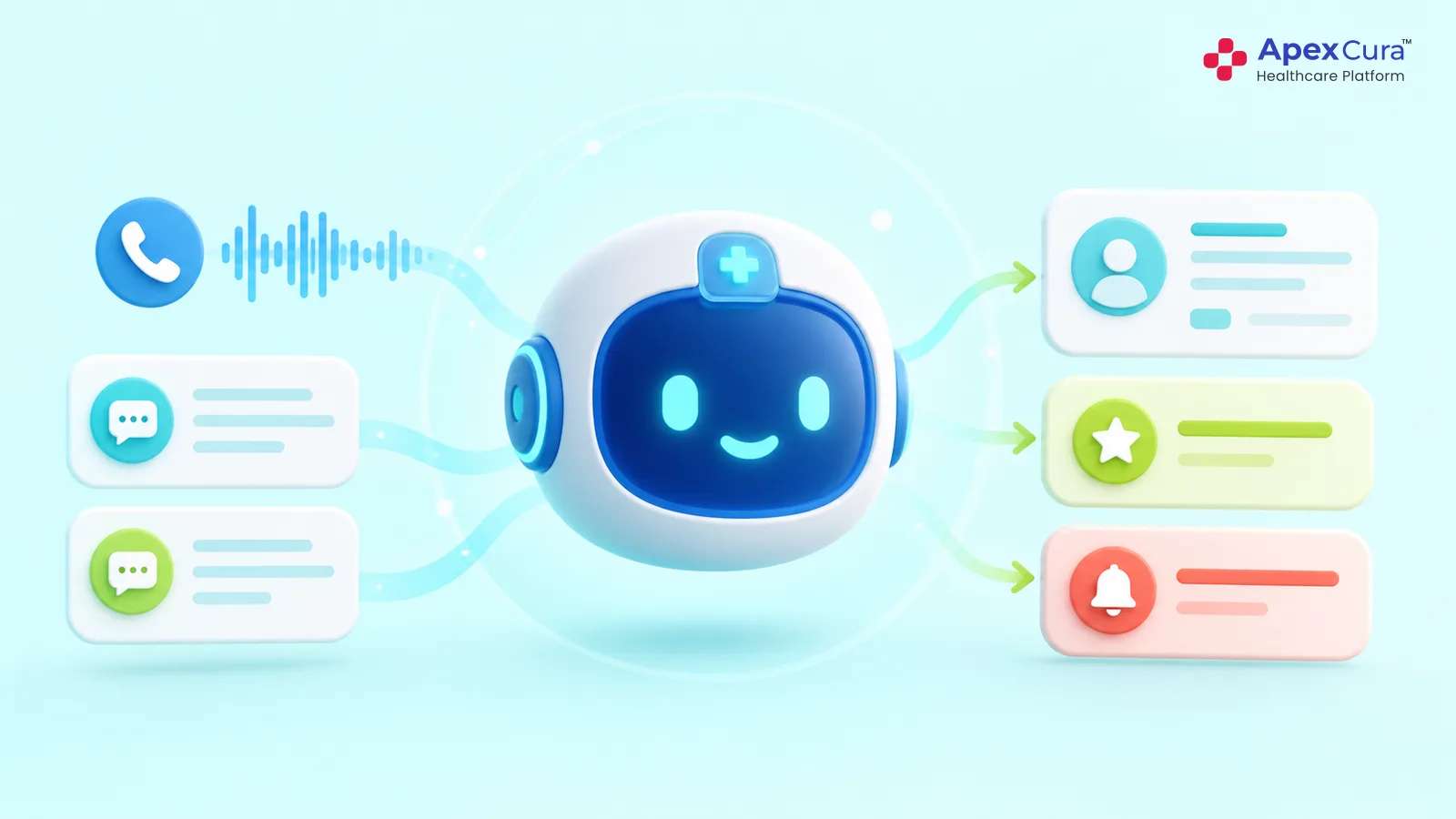
AI reviewed recorded phone conversations and flagged moments where a patient expressed interest in a service but did not complete a booking.
WhatsApp and chat conversations
AI analysed abandoned or incomplete chat conversations and identified service keywords, unresolved questions and patient intent signals.
OPD records
OPD prescriptions and notes were reviewed for follow-up or review dates so the outbound team could prompt patients to return for the next step.
Treatment plans
Treatment workflows were analysed to detect recommended services that had not yet been availed, such as a lab test, scan or follow-up consultation.
Unconverted patient enquiries
Incomplete interactions were converted into structured leads and added to the hospital’s central lead funnel for follow-up.
How AI identified additional leads
The AI models looked for patient intent, missed follow-up needs and service recommendations across existing data. Each qualified signal became a smart lead that the hospital team could review and act on. This approach helped the hospital recover patient opportunities that were already present but not visible through manual workflows.
The results: 25% more leads from existing data
Within three months, nearly 25% of all leads in a given month were created by these AI models. These leads came from existing calls, chats, treatment plans and OPD records, so the hospital generated more patient opportunities without adding pressure on staff or increasing marketing spend.
What hospital leaders can learn from this case
Hospital lead generation is not only a marketing problem. It is also an operational intelligence problem. Patient intent often exists inside call centre conversations, WhatsApp chats, prescriptions and treatment plans. With the right healthcare CRM and AI analysis, hospitals can improve patient conversion by acting on data they already have.
How Apex Cura helps hospitals recover revenue leakage
Apex Cura helps hospitals identify missed patient enquiries, improve lead management and reduce revenue leakage through AI-driven analysis of hospital interactions and workflows. Explore Apex Cura Healthcare CRM, learn about the AI agent for hospital patient CRM, or talk to us about hospital revenue leakage.