
Why Patient Enquiries Get Lost at the Hospital Front Desk
Calls, Walk-Ins and Messages May Not Become Enquiry Records
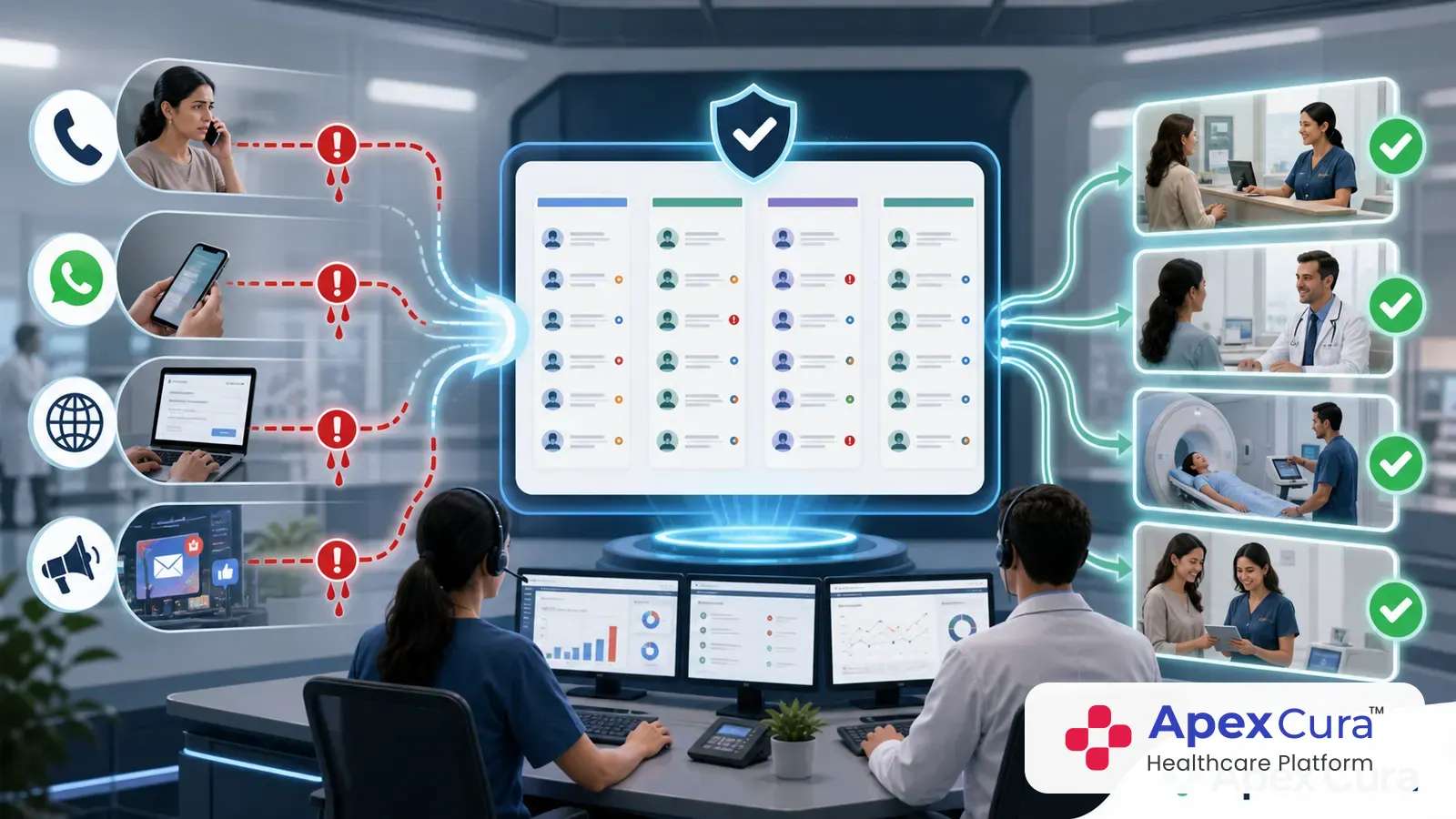
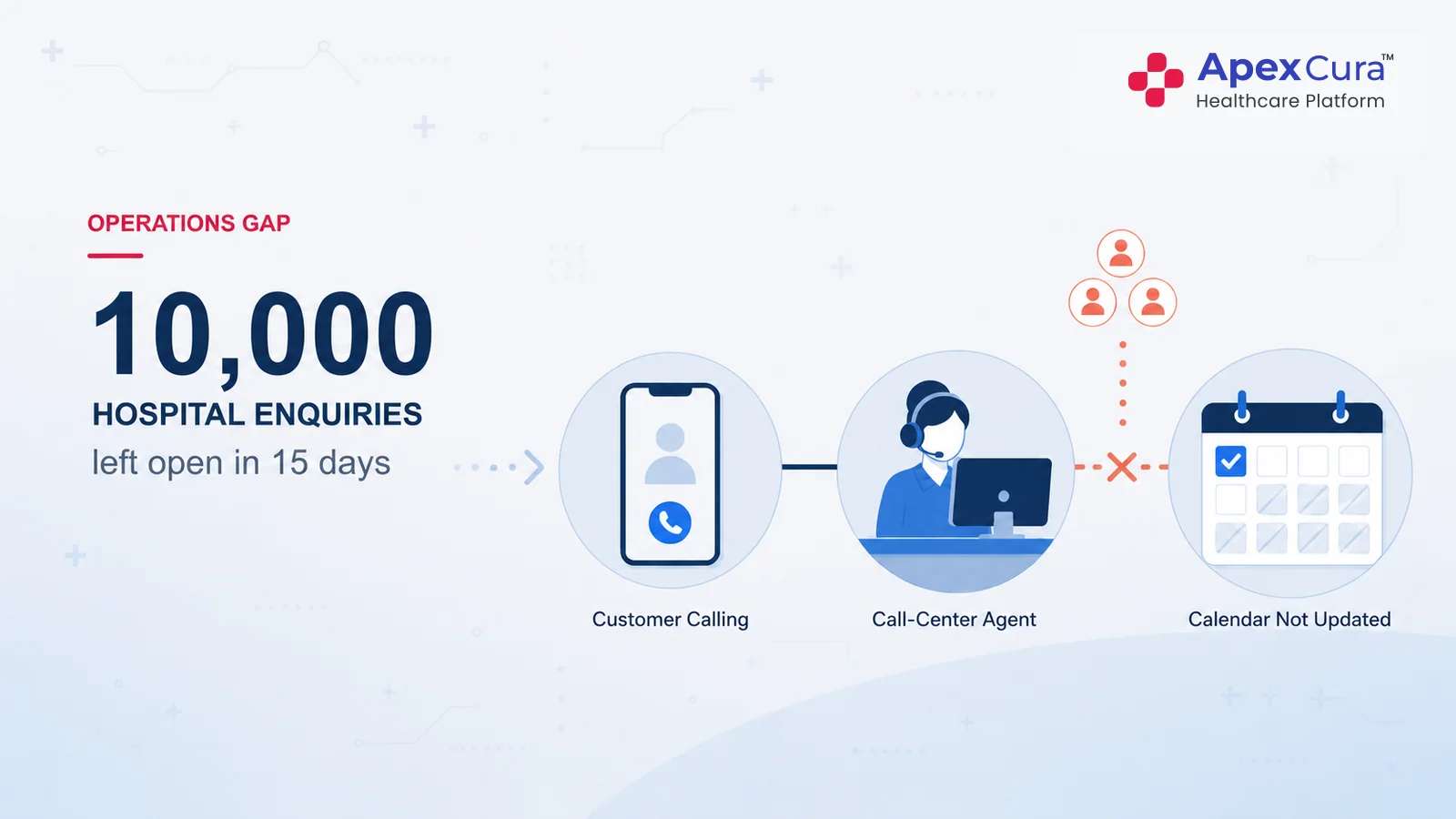
A patient may call about a treatment, visit the hospital without an appointment or ask for information through a message. Front-desk staff may answer the immediate question without creating an enquiry record. The interaction then disappears after the conversation ends. This happens more often during busy periods when employees are also managing registrations and patient movement. Hospitals need a clear rule for deciding which interactions are genuine enquiries and what information must be recorded. Every relevant enquiry should enter one visible workflow with its source, time and patient requirement. Otherwise, management cannot know how much patient interest reached the hospital or how much was lost.
Incomplete Patient Requirements Make Correct Assignment Difficult
A name and phone number are often insufficient for the next team to help the patient. The enquiry may also need the treatment requirement, preferred doctor, branch, language and expected visit time. When these details are missing, staff must contact the patient again or guess where the record should go. Incorrect assignment creates transfers, delayed responses and repeated explanations. The front desk should capture only the information needed for the next action, using simple fields that fit the conversation. Mandatory fields should not make the interaction unnecessarily long. A clear minimum-data standard helps the receiving team understand the requirement and continue without starting the conversation again.
Enquiries Get Delayed When Ownership Is Unclear
Recording an enquiry does not ensure that someone will act on it. The front desk may share details through a paper note, personal message or verbal handover. The receiving department may assume another employee is responsible. A patient can then wait without a callback while every team believes the enquiry has moved forward. Each record needs one visible owner, a required next action and an expected response time. Reassignment should also preserve the earlier activity history. Clear ownership helps employees know what they must do and enables supervisors to identify unattended records before the delay becomes a patient complaint or a lost appointment opportunity.
How Hospital CRM Supports Front-Desk Lead Management
Capture Every Patient Enquiry in One Workflow
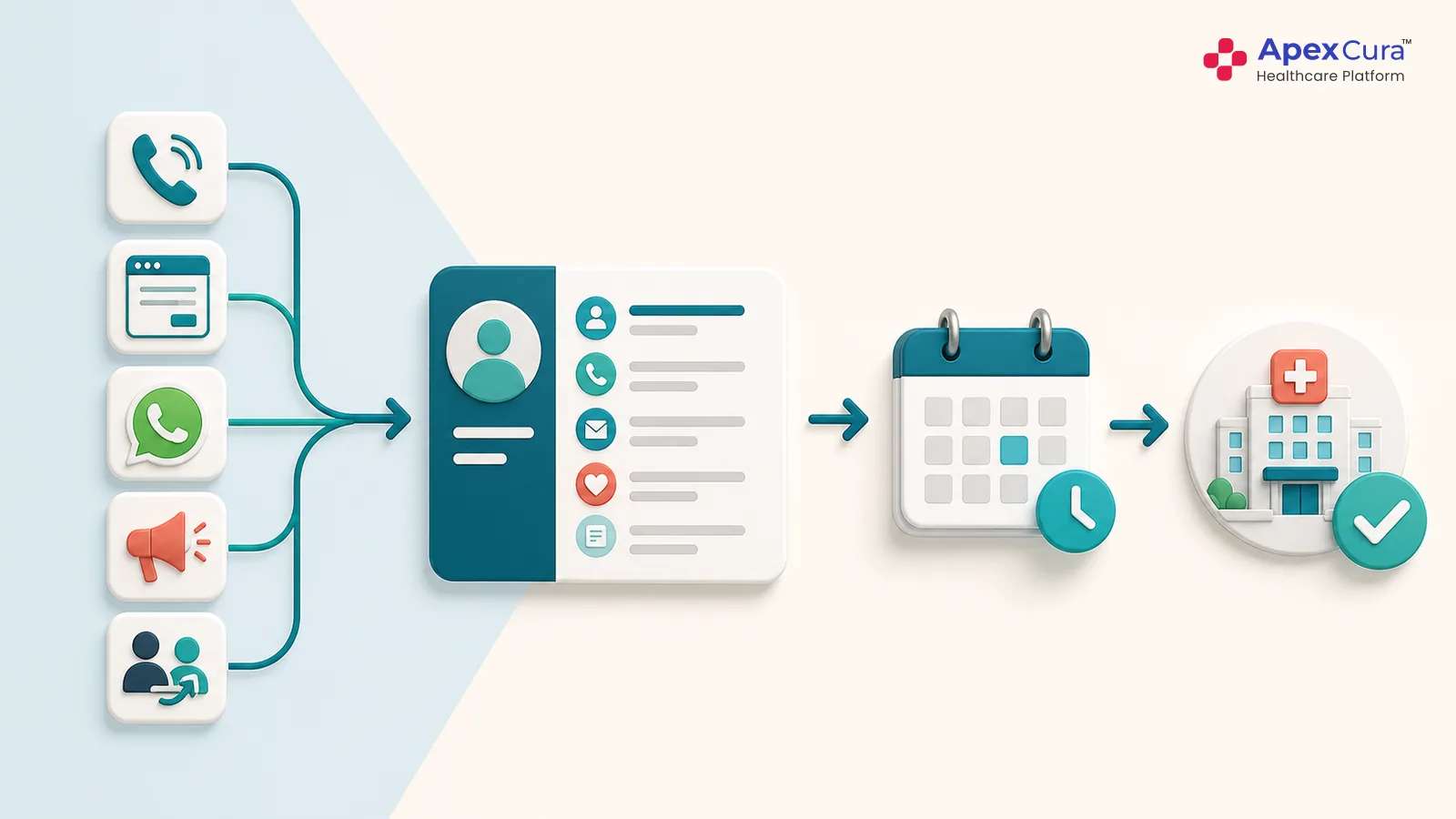
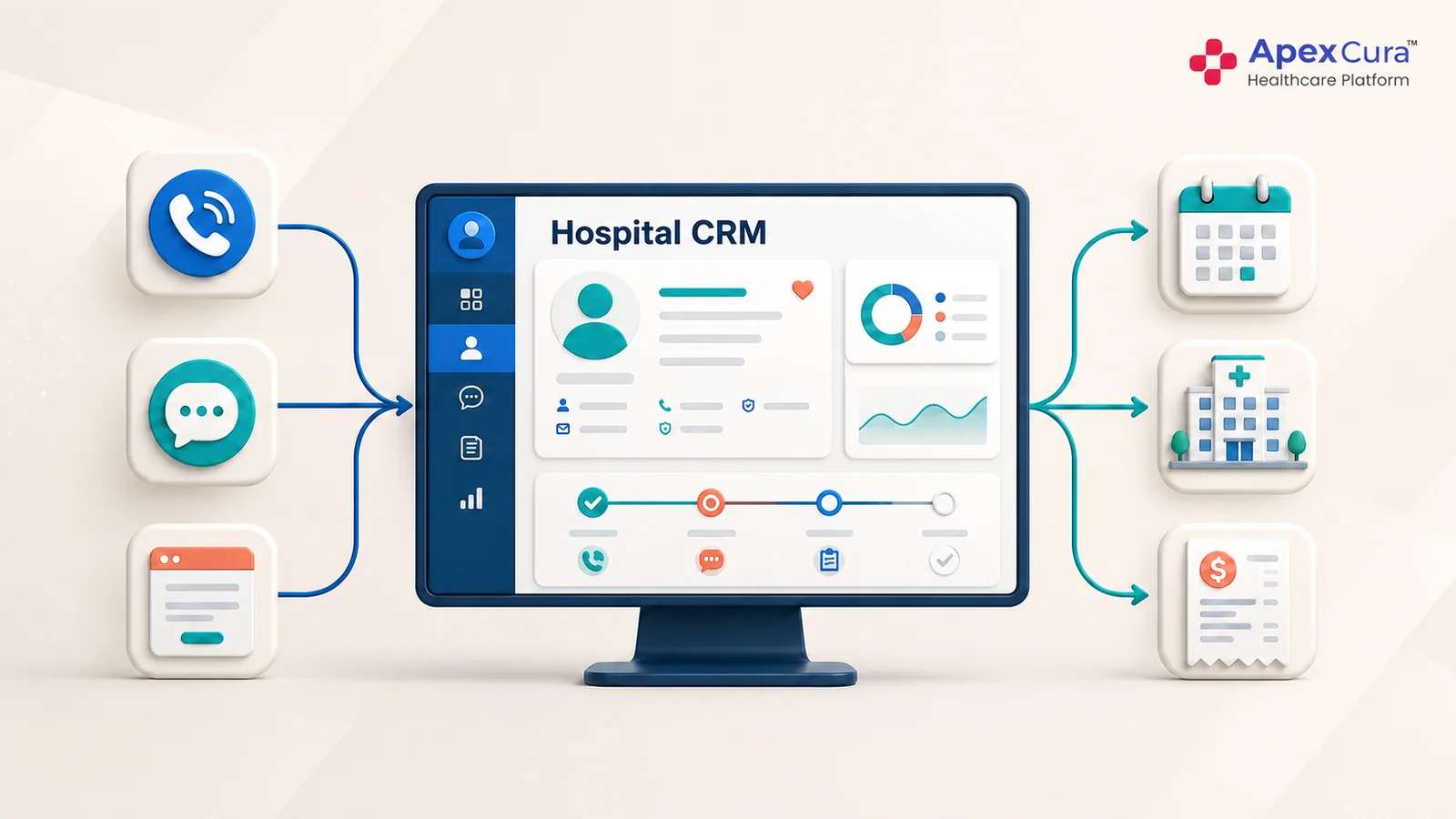
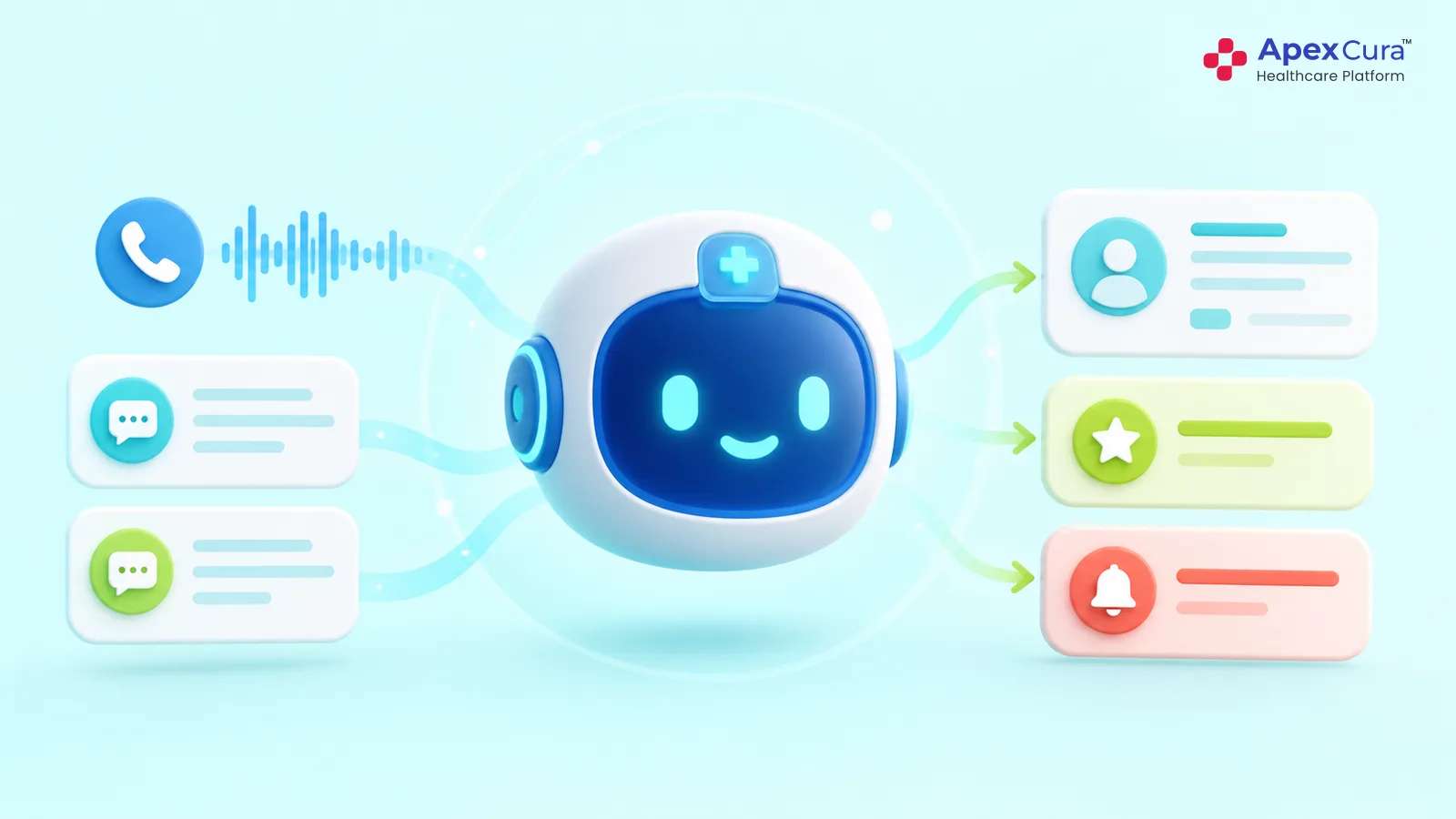
A Hospital Lead Management CRM gives the front desk one place to record patient enquiries and their next actions. Connected channels can create records automatically when supported, while staff can add walk-ins and other direct enquiries. The record should preserve the source, patient requirement, contact details and time of interaction. Possible duplicate enquiries can be reviewed using hospital-approved identity rules. This shared workflow reduces dependence on notebooks, spreadsheets and personal messages. It also allows another authorised employee to continue the interaction when the original staff member is unavailable. The objective is not more data entry. It is a reliable record of every genuine patient requirement that needs action.
Assign Enquiries to the Correct Team or Department
The assignment process should reflect how the hospital actually handles different patient requirements. Rules may consider speciality, treatment, branch, language or the team currently responsible.
- Appointment requests can move to the scheduling or contact-centre team.
- Treatment enquiries can reach the appropriate counsellor or speciality team.
- Branch-specific requirements can remain with the selected hospital location.
- Authorised staff can correct an assignment when the requirement changes.
The complete handover history should remain visible so the patient does not receive conflicting responses from different teams.
Track Follow-Ups, Appointments and Enquiry Outcomes
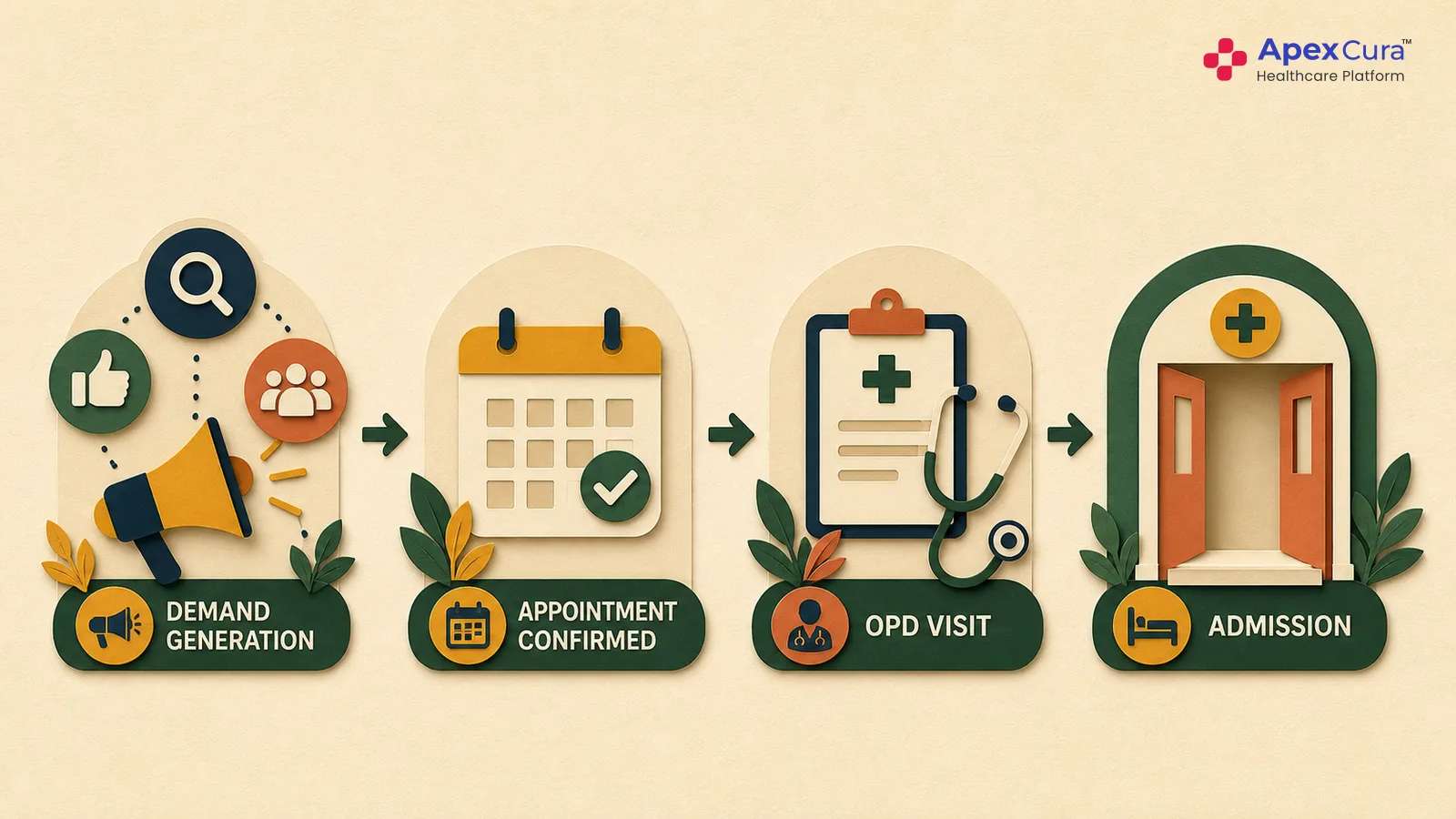
Many front-desk enquiries need action after the first interaction. Staff may need to confirm a doctor’s schedule, share an estimate or call after receiving information from another department. The CRM can record the promised action, follow-up time and current owner. It can also preserve attempts, responses and agreed next steps. Where integrations are available, the enquiry can later connect with an appointment, completed visit or billing outcome. This helps teams distinguish patients who need further support from enquiries that have already progressed. The broader guide to Hospital Lead Management explains how this journey continues beyond the front desk.
How Supervisors Can Reduce Front-Desk Enquiry Leakage
Identify Unassigned and Overdue Patient Enquiries
Supervisors should not need to inspect individual notebooks or ask every employee for an update. A CRM view can show enquiries without an owner, follow-ups that are overdue and records with no recent activity. Teams can prioritise these exceptions before reviewing routine work. Response expectations may differ by enquiry type, speciality or operating hours, so the hospital should define practical thresholds. An unanswered late-night message should not be measured like a missed follow-up during an active shift. Managers should review the underlying record before taking action. The purpose of visibility is to recover patient enquiries early and improve the process, not to treat every delay as an employee failure.
Review Loss Reasons and Weak Team Handovers
A closed enquiry should contain a meaningful outcome. Broad labels such as not interested or no response provide little guidance unless the team records what actually happened. The patient may have chosen another hospital, found the price unsuitable, received no doctor availability or stopped responding after several attempts. Supervisors can group these reasons by source, department, branch and stage. Repeated losses after a particular handover may reveal unclear responsibility or missing information. The detailed article on Hospital Enquiry Leakage explains how enquiries disappear across the wider acquisition process. Front-desk reviews should focus on causes that the hospital can practically correct.
Connect Enquiries with Appointments, Visits and Revenue
Front-desk performance should not be measured only by the number of records created. Hospitals need to understand whether valid enquiries became appointments, completed visits and revenue outcomes. This connection requires reliable patient matching and integrations with the relevant hospital systems. It also needs clear definitions for conversion and revenue attribution. A booked appointment is progress, but it is not the same as a completed visit. Management can compare outcomes by source, requirement, team and branch while accounting for differences in case type. This information shows whether front-desk capture and handovers are supporting the patient journey. It also reveals enquiries that converted but were never closed correctly in the CRM.
Conclusion
Hospital front-desk lead management begins by recognising which patient interactions require further action. Every genuine enquiry needs a reliable record, sufficient context, clear ownership and a visible follow-up. Hospital CRM can support this workflow without combining it with unrelated chatbot or outreach features. Supervisors can then identify unattended enquiries, review weak handovers and connect front-desk activity with appointments, visits and revenue. The objective is not to turn reception into a sales desk. It is to ensure that patients who ask for hospital services receive a clear and accountable next step.